
|
||||||||||||||||||||||||||||||||||||||||||
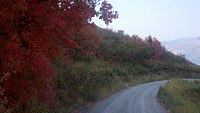 Chinese Peak, West Trail I have spent the vast majority of my cycling time on the road. It’s useful (in terms of commuting), it’s easy, it’s a great workout (in terms of those wonderful weekend road rides), and there’s very few variables involved to throw off it’s sheer simplicity and ease. Most of the time, road cycling in Pocatello involves nothing more than scenic miles of endless country roads and your ability to traverse them on your road bike. It’s so pure and simple. I love it. However, I would venture to say that most cyclists in Pocatello love this area for it’s world class mountain biking and it’s vast network of trails that range from easy to insane. It would be a shame to spend all your cycling time on the road in such a rugged and mountainous place. But getting out on the trail usually involves hopping on a mountain bike and traversing terrain that is absolutely nothing like a smooth, flat section of pavement. Oh dear. I’m convinced there are 2 kinds of mountain bikers: naturals and panicky wimps, and I am of the latter category! I know, I am sure there is a whole spectrum of mountain bikers out there, but it appears these are the 2 categories I’ve observed so far in my beginner-to-intermediate mountain biking history. I’m sure I’ll change my opinions after I get more experience. I always do that with everything it seems, but there’s nothing wrong with jumping to conclusions too early, is there? This is a blog after all! :-) A few friends of mine, Jeff Selfa and Dan Lloyd, are quite experienced at mountain biking and have offered many times to go on a few rides with me and help me out with my technique. This seldom happens though since A) getting people together for a ride just adds more complication to the hop-on-your-bike-and-go feel to cycling and B) I like learning by myself most of the time, even if it takes me longer to learn. That’s just me. :-p Ok, enough background history, let’s talk about 3 recent mountain bike rides I’ve done! The Cedar – Center – Buckskin Route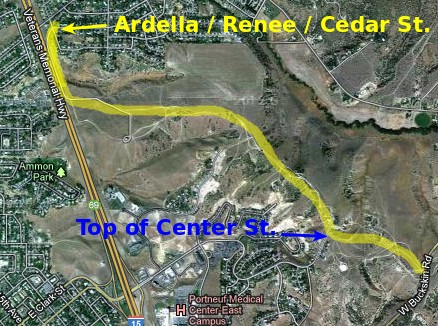 Cedar – Center – Buckskin trail map Jeff recommended a fairly short trail close to town that is fun to practice mountain biking technique on. It is shown on the crudely drawn route map to the left. There is one steep section of the route where you do have to hike your bike up a rocky part, but other than that it is pretty nice and easy. It’s so close to town that it’s a trail you can ride to from your house and traverse it within an hour easily. It was on this ride that I attempted to try a few different things to make steep downhilling easier and less scary for me. I lowered my seat a couple of inches, hung my legs down over the front of my pedals to lower my center of gravity as much as possible (probably not a proper technique!), and made my way down a steep section with some loose gravel on it. It was surprisingly easier than having a higher seat and keeping my feet on the pedals, and therefore felt less like I was going to fall over the front of my handlebars. The Two Chinese Peak RidesAfter feeling better about my downhilling technique, I wanted to try my new skills out on my arch nemesis of trails: the south side trail of Chinese Peak. This is a fairly narrow, rocky trail that has some very steep sections near the top of it where I am forced walk my bike down due to my fear of riding down it. And it was those sections that Dan Lloyd, in the past, had merrily rode down to my chagrin. :-( Also, as I have attempted (and failed) several times in the past, I wanted to finally succeed in cycling up to the top of Chinese Peak (on the regular, west side trail, of course) without stopping! This is a feat that requires that you do 2 critical things:
My first attempt was in late October and all the lovely foliage colors were looking beautiful. Some of the large clumps of trees also happen to be at the same location as the steep sections, so I took the opportunity to wuss out, get off my bike, and take some photos of the fall colors. Sigh. :-) After getting to the top, I cycled over to where the horrifying south trail begins and there was a big “Temporary Closure” sign across it. Secretly, I was relieved that I had an excuse not to traverse the trail, and I gleefully cycled back down the west trail. My second Chinese Peak ride was with Dan Lloyd, and so I was anxious to show him a thing or two about scaling Chinese Peak without stopping (hopefully)! Also, he had been running a lot lately and not spending any time on his bike, so I was curious to see how he’d do. As it turns out, he was a bit faster than I was, but he also had to stop a few times. I, however, slowly made it up the entire way without stopping! Success at last! We found the south trail not to be blocked by closure signs, but the trail was muddy and a little snow-laden, so we went back home down the west trail. There’s always next year to test my skills on the south trail. So there you have the end of the mountain biking season of 2012. Here’s a brief to-do list for myself for 2013:
I am envious of those cyclists on YouTube videos that seems to use their bicycles as a natural extension of their bodies and can make it do amazing things, and I yearn to explore that almost completely missing part of my cycling experience! As always, I’ll let you know how I do by recording my experiences in this blog, probably more for your amusement than for your information. ;-p 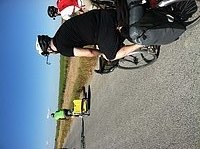 Cycling to American Falls On Frontage Road My usual cycle camping buddies (Travis Poppe and Dan Lloyd) and I were eager to do an overnighter soon, and Labor Day weekend was approaching. Recently, Jeff Selfa had joined our circle of geeky beer drinking cycling folks and Travis had gotten himself a girlfriend, Justina, and they both wanted to come along as well. Jeff is a very experienced cyclist and has the ability to blow us all out of the water in terms of speed and skill as well as sheer coolness factor of the bicycles that he rides, so I thought he was going to be bored to tears for this event. Justina is pretty new to cycling so I was worried that this 60 mile round trip ride was going to make her hate cycling for the rest of her life. Ah, well, I was interested to see how things were going to turn out! And you never really know how a cycle camp is going to go anyway, to be honest. But that’s how adventures are supposed to be and I wouldn’t have it any other way! We all gathered at Travis’ house at around 9:00 am on Saturday, September 1. It was a sunny day and the temperature felt perfect. Dan and I were towing trailers, Jeff and Travis had their panniers packed, and Justina carried a bottle of water. ;-) Yes, we knew what Justina was in for, so we thought we’d better assist her the best we could. She seemed very happy and enthusiastic about the ride; I hoped this would carry her through when things got tough for her ahead! 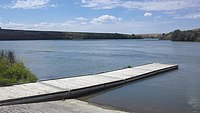 A Dock On The Mighty Snake River Soon, we were all cycling along Highway 30 at a moderate speed, chatting with each other and enjoying ourselves. By about mile 20 we were all ravenous for Tres Hermanos, our favorite place to eat in American Falls. A few miles later we pulled into the restaurant parking lot, went in, got our food, and began shoveling tamales into our faces. There’s nothing like authentic Mexican food after 25 miles of riding. :-P~~ After we ate, we picked up some food and beer at a local grocery store and cycled the remaining 5 miles or so to Pipeline Road. Jeff and Travis decided to cycle down the dirt road to see how crowded it was since many locals love to have one final camp for the year over Labor Day weekend. After a while, Jeff cycled back to us and announced “we’ll have to share the campground… with the birds!” The campground was completely empty! We all cycled down to the campground, had a look around, cracked open a few beers, and relaxed. The lush greenery, massive Snake River, pelicans floating by, and the surprising absence of bugs made this area seem like such a paradise. Next, we set up our tents, made a fire, drank more beer, and started cooking some food. Shortly thereafter, dark clouds started coming in, the wind began to pick up, and a few sprinkles began to fall. Dan shot a video of it!
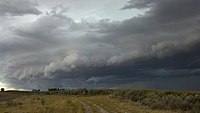 Storm’s A Brewin’ The rain started getting a bit harder, but I just stood there like an idiot, shirtless, drinking beer and enjoying myself. The temperature hadn’t fallen much and I have a layer of blubber that keeps me warmer than other people, I think. Dan and Jeff put on their rain jackets and Justina turned herself into a burrito with a sleeping bag. Next, the wind and rain started falling way too hard for comfort, so I dove into my tent! I was sure to take some beer with me, though. I’m an expert at outdoor survival, I’m sure you can tell. The rain stopped after about 30 minutes or so, so I emerged from my tent and went back to the campfire. Jeff and Dan had apparently weathered the storm by standing around the campfire with their jacket hoods cinched up. We cooked more food, ate plenty (mostly thanks to Jeff and Dan’s instant add-boiling-water meals) and took some lovely shots of the sun setting across the Snake River. And then we headed to our tents for bed. And it was at this point that poor Jeff discovered that his bivy sack and sleeping bag were completely soaked. He decided his best choice was to cycle home through the night. Dan volunteered to go with him since drivers probably aren’t used to seeing cyclists pedaling along the back roads in the middle of the night. I loaned Jeff my headlight blinker and he and Dan pedaled off into the night. Jeff wrote a brief but vividly written article entitled “The Pipeline Deserter Branch – s24o Labor Day 2012” about his experience that night. Tis a good read! 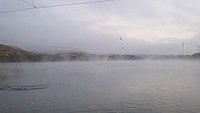 Mist Coming Off Of The Snake River The next morning, thick fog rolled in and mist was coming off of the river. It looked like like an enchanted scene from a fantasy movie. I walked out onto the dock and basked in the sounds of fish jumping and water birds talking to each other. As soon as Travis and Justina were up, we cleaned up the camp site, packed up, and headed back towards American Falls. There, we stopped at a cozy diner called Casey’s Lounge, ate a hearty breakfast with plenty of hot coffee, and then headed back to Pocatello. Hot coffee and breakfast is so fantastic and delicious after camping overnight, isn’t it? The ride home was pleasant except for the fact that we were all tired of sitting on a bicycle saddle. And the temperature had risen a lot, so by the time we were nearing Pocatello, I was ready for a long shower and more beer! And that’s exactly how I ended my journey. Oh, and Justina endured this whole trip like a real trooper! She did amazingly well for her first long bike ride as well as being surrounded by beer swilling barbarians for 2 days straight and we’re all very proud of her! Here’s a link to all the photos we took! And here’s a short video taken by Travis at around 7 am on Sunday morning (September 2):
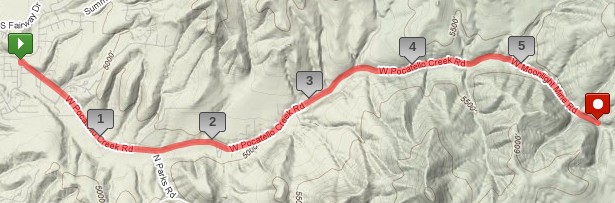 Booth Drive to the end of Pocatello Creek Road I’ve been riding a touring bike, road racer, and mountain bike for the last 5 years and each one feels different in terms of riding position, speed, and maneuverability. The touring bike has a long wheel base, 32 mm tires, and is about the best combination of speed, aerodynamic riding position, and comfort of all my bikes. It just feels good to ride, but this may be due to the fact that it is the bike I ride the most. My road racer has the average road racer frame geometry, skinny tires, and is good for a no-frills, minimalist bike ride where the objective is to get from point A to B in the least amount of time. On the other hand, it has a rear rack, a granny gear, and some low gearing so it isn’t exactly the raciest road racer. The mountain bike has fat, knobby tires, disc brakes, and compared to the other bikes’ riding positions it feels like you’re riding a tricycle. The riding position is quite upright and it feels slower than beans. So just for fun, I thought I would ride all three bicycles along the same route on 3 different weekends and compares the times! This way, my legs would be fresh each time and all variables would be mostly constant. My cycling buddies thought the results wouldn’t be very accurate due to different weather, wind, how Korey was feeling that day, etc. But, hey, it’s the best your average recreational cyclist can do, OK? And besides, I’d be burning calories while experiencing an interesting experiment! The route I selected was an out-and-back gradual climb of about 900 feet starting at the intersection of Booth Drive and Pocatello Creek Road to the top of Pocatello Creek Road and back to the intersection for a total of 11.8 miles. I chose this route mostly because it’s close to home, so I can do the whole ride in under and hour. Even though the route is far from flat, it is out-and-back so that any climbing slowness could be made up for with a speedy decent. And at the same time my lightweight skinny-tired road racer should be able to climb faster and descend faster, thus magnifying the speed difference between it and the other bicycles. On the other hand, this route snakes through a canyon so that top speed on the downhill cannot be reached without the risk of losing control around a bend. Ah, well, enough of the pros and cons, let’s take a look at the results:
Please note that the total speed averages take into account the time spent on the downhill and the uphill; I didn’t just add the uphill and downhill numbers and divide by 2. Also, the table shows the order in which the rides were done. So by the time I got to the MTB ride, I had some experience with the road and the stiff wind that seems to blow up the canyon all the time! I guess my cycling buddies were correct in saying that the wind speed would affect the results. I think the wind blowing up the canyon really improved the road racer and MTB uphill times by a few minutes, and really ruined the downhill. I was tired of bucking the wind on the downhill, so when I got to the MTB ride I really gave it hell on the downhill, especially since I had to overcome both wind and knobby tire rolling resistance. And I guess that paid off since I got the same downhill time on the MTB as I did on the road racer. Anyway, there you have my less-than-perfect experiment results! I actually had a lot of fun with this and I highly recommend that you time yourself on your bikes with different routes and such. You never really know how well a bike performs or how well you perform until you get out there and do some timed cranking. Gee, maybe I should do another experiment where I keep the bicycle constant and then cycle while tired, drunk, and hungover and then compare those three results! Or maybe keep the bike and the rider’s condition the same and do a ride at 60, 70, and 80 degrees! Ah, so many experiments to think of! :-)
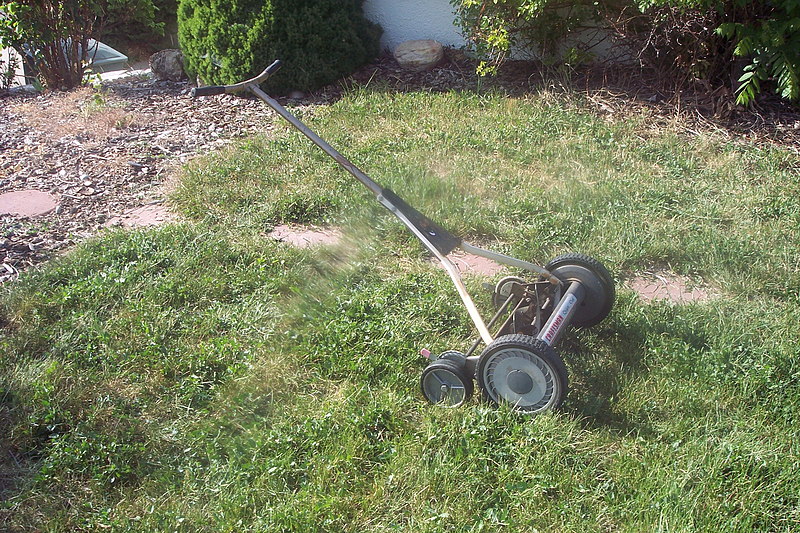
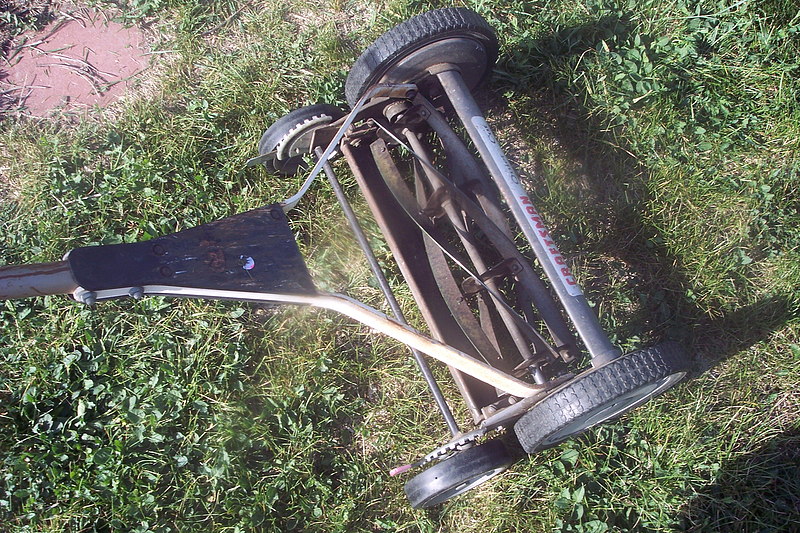
Many years ago, back when I still lived with my parents, my mom decided to buy a reel mower. She hated smelly lawn mower exhaust and she was a big fan of peace and quiet, so she read up on reel mowers and decided to have her son (me, the family landscaper) give one a shot! After getting used to the feel of the mower, I found that I liked it better than motorized lawn mowers for a number of reasons:
Reel mowers are very simple machines, so they usually have no problems or repairs for many years. After using my mower for 6 years, however, the handle decided to snap off! After calling around to all the local stores that sold mowers, I was told that replacement parts didn’t exist for any kind of reel mower than they knew of and that I’d have to just buy a new one. I thought this was ridiculous, so I called around to some repair places, looked on craigslist.com, and I found that I actually had a few options. I found a handyman who said I could go buy a pipe from a local hardware store and he would bend it, drill it, and that should work fine as a handle. There were also a few people on craigslist.com selling ancient reel mowers for a few dollars, and from the photos it looked like I could probably fit an old mower’s handle onto my mower with a little bit of finagling. That weekend, my wife and I went to a friends’ yard sale that was going on, and lo and behold an old fashioned reel mower was there for sale! To make a long story short, I bought it for the low, low price of $5, took the handle off of it, bent it a little to fit my mower, and I was back to happily mowing in no time! It sure beat buying another mower!
Lastly, here is another benefit of reel mowers from the lawn mower Wikipedia article: Of all the mowers, a properly adjusted cylinder [reel] mower makes the cleanest cut of the grass, and this allows the grass to heal more quickly. The cut of a well-adjusted cylinder mower is straight and definite, as if cut with a pair of scissors. This clean cut promotes healthier, thicker and more resilient lawn growth that is more resistant to disease, weeds and parasites. Lawn cut with a cylinder mower is less likely to result in yellow, white or brown colouration as a result of leaf shredding. Cool! :-D Happy mowing, everyone! 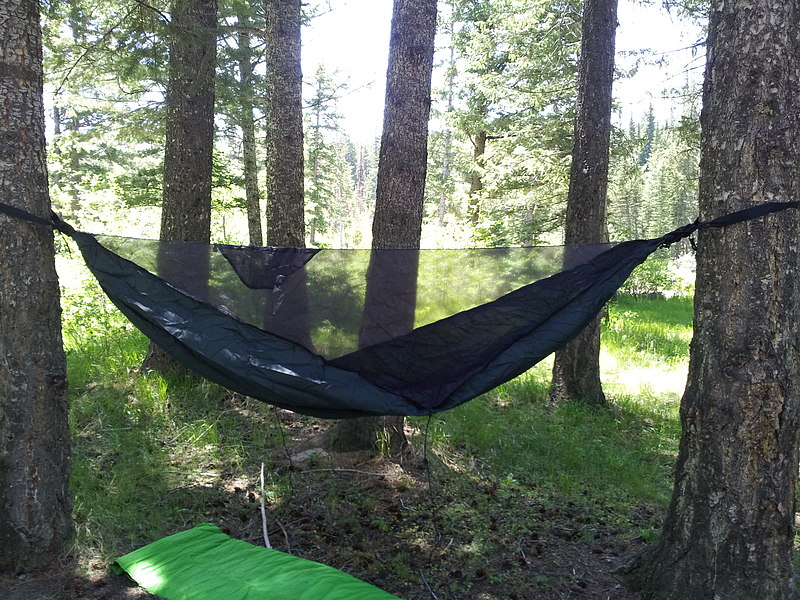 Travis' Hennessy Hammock For those of you who just want to browse the photos taken at this cycle camp, here is the gallery! The photos were taken with cell phones by various people, most likely while under the influence. ;-p Also, I was too lazy to put the photos in chronological order in the gallery. Sorry :-( So, we (myself, Travis Poppe, and Dan Lloyd) decided to do an early spring cycle camp, and in Idaho, by the way, “early spring” is May. April is rather chilly and snow is still usually plentiful above 7,000 ft. or so. We felt like camping somewhere fairly close and with some trees so Travis could try out his new Hennessy Hammock. Dan knew some other folks who also wanted to camp with us, so we conveniently took advantage of the SUV they were going to drive and made them haul food, water, and firewood. I guess we kind of cheated. :-) At this point in our cycle camping career, we are pretty accustomed to how to load our bicycles up, and soon the three of us were at Travis’ house and comparing equipment and so forth. Travis had his usual setup of 2 massive panniers, I had my usual child trailer, and Dan also had a child trailer. I hoisted both trailers to compare weight and Dan’s probably weighed about 70 lbs at least while mine was probably only 20 lbs! Dan is always going the extra mile. I was seriously wondering how he was going to pull off a 1600 foot climb up to Scout Mountain with all that weight and was anxious to see how he did. 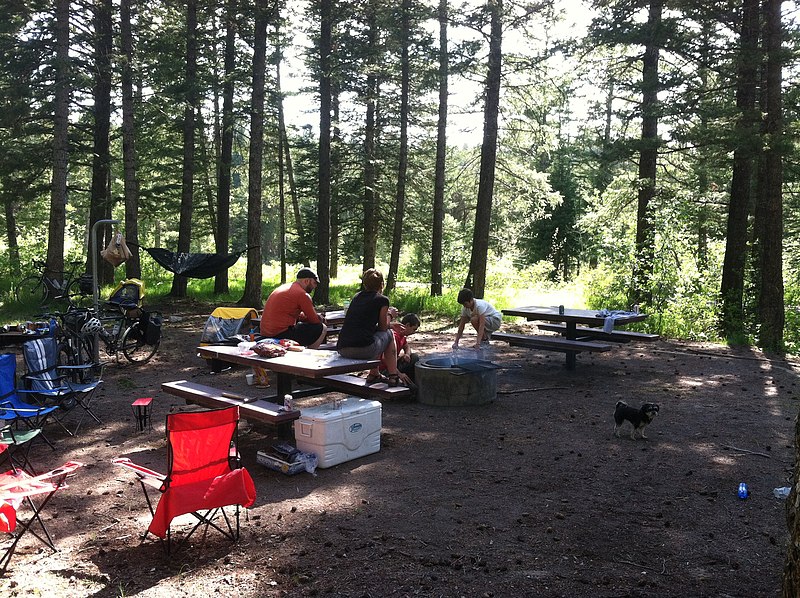 The camp site Cycling up to the base of Scout Mountain wasn’t too bad. I actually stopped by a gas station on the way up and picked up a six pack of Samuel Adams Boston Lager and threw it in my trailer just to try to even out the weight difference between mine and Dan’s trailers! But then came the steep 5 mile climb to the camping area of the mountain. I shifted into my lowest gear, relaxed, and enjoyed the scenery for the most part, but I could tell through the last third of the climb that Dan was having a tough time. After pulling into the parking lot at the top, I quickly laid my bike down, grabbed a beer out of my trailer, and stood there slurping my beer while waiting for the others to arrive just to make their experience a little more frustrating. Bwahaha. :-) I then saw Dan walking his bike and trailer the last few feet up to the top and I thought he must be really, really having a tough time. Poor guy. Dan’s friends had arrived about an hour before us, so they met us in the parking lot and led the way to the camp site. We then began drinking more beer, setting up tents, taking some photos, and having a good time. Dan, however, disappeared into his tent to lie down for a while and eat a few pieces of watermelon that his friends provided; yeah, he was definitely suffering from exhaustion and not feeling like partying much. Meanwhile, Travis took great glee in busting out his new hammock, tying it to a couple of trees, and figuring out how the rest was supposed to be put together. 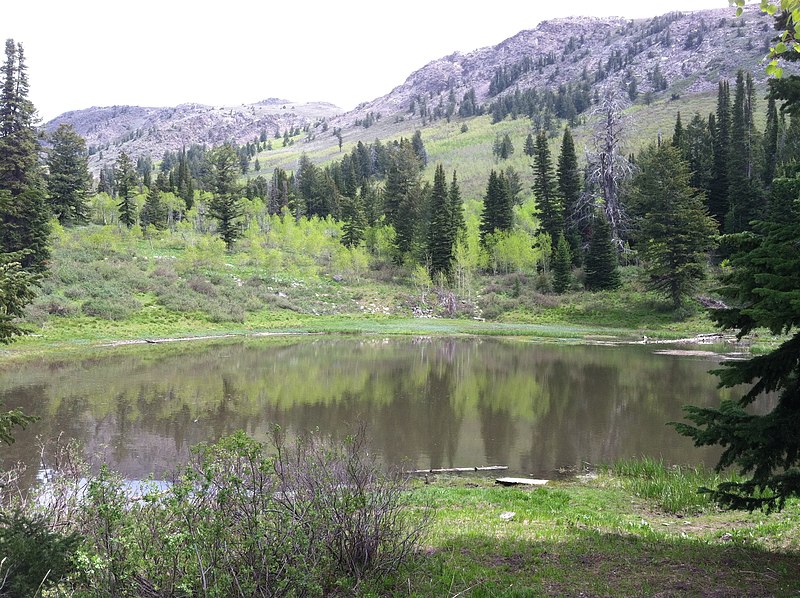 Scout Mountain scenery After an hour or so, Dan was back to his usual self and was eating and drinking with the rest of us. Everyone then decided to take a walk and look for some geocaches. We actually found a geocache, an old abandoned amphitheater, and lots of great scenery. Later in the evening, more friends of ours drove up to the campsite and hung out with us. The most important event of the evening was the camp stove cook-off! This is where Travis, Dan, and Brian (one of our visiting friends) all took out their various camp stoves and saw who could get water to boil the fastest! Travis and Dan both had some sort of little propane fueled contraptions whereas Brian had one that required him to burn some twigs, while a AA battery powered fan blew upward beneath the burning embers. It looked like an episode of Science In The Great Outdoors or something. Congratulations to Travis who won with his Jetboil stove! After hanging out with more visiting friends, we all settled down for bed around midnight. The next day, we had a breakfast of coffee, omelettes, and sausage (thanks to Leslie for showing us how to cook eggs in a plastic bag!). Dan’s friends decided to drive home so we helped them pack up, and Travis also decided to go home since he was hungover ;-) However, Dan and I wanted to do a short hike before heading home, so we took off to the south and saw some spectacular scenery. We definitely want to devote more time to hiking around Scout Mountain. It is a big mountain and there is a lot to see! Then Dan and I wandered back to the camp site, made sure everything was packed up and the site was clean, and took off for home!
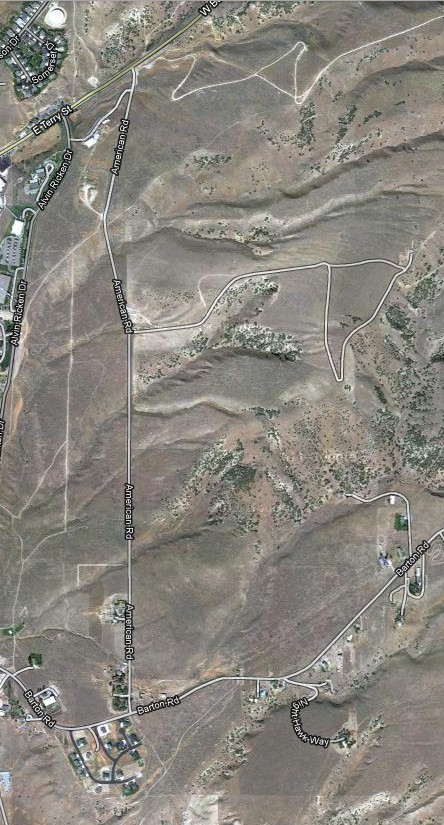
So as I was looking around the Pocatello area on Google Maps for interesting places to ride my bike, I noticed a collection of trails just east of Idaho State University. A few days later I hopped on my mountain bike to go have a look. Between Alvin Ricken Drive and American Road are a few interconnected trails that stretch about 1.25 miles. Kind of a nice place to go to practice your mountain biking skills without going very far out of town. These trails are used quite a bit by walkers and runners, so don’t get too crazy. As you can see on the map to the left, there are three paths that go east off of American Road. The north trail is a nice, wide trail that goes up to the top of Chinese Peak. The middle path is a private road, according to the sign I saw while cruising along American Road on my bike. And the road on the south end of American Road is Barton Road which is paved all the way to the main trail head of Chinese Peak. I’ve been using Barton Road to get to Chinese Peak for years now, so I’m glad I found the trail on the north end of American Road. Actually, I remember hiking this trail many years ago, but I’ve never biked it. I’m going to give it a shot in the spring! I actually road a bit up this trail and took a few photos. The lure of a trail head is a powerful thing. :-) Family Services Alliance of Southeast Idaho puts on a yearly bike ride called the Tour de Vins and they have a variety of routes that can be taken. The routes range from “kid friendly” to “one heck of a 3 hour workout”. Naturally I had to sign-up for the most difficult one (see route here). I’ve been cycling for 4 years now, I think I can handle it! Here are my personal and bicycle specs so that you can compare with your own: 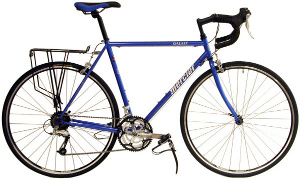 My Crazy-Fast Road Racer! Bicycle Specs:
Cyclist Specs:
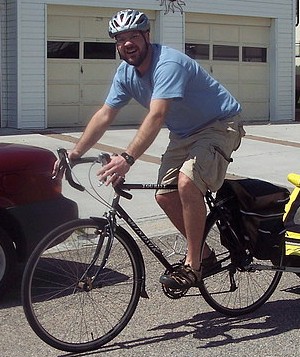 A photo taken on a completely different day. I didn’t dress this way on this ride. Honest. The Route:
So, How Was It, Korey?I pretty much knew what I was in for with this route since I’ve cycled around the area a lot. Before this ride, the only time I cycled over Buckskin from the southeast direction was when I was coming back to Pocatello from Inkom, not from McCammon. Yeah, this was going to be hard. I felt really good that morning, and I cycled out to McCammon from Pocatello in about 1 1/2 hours. 16.6 mph average, not bad. The day was pretty cool (I had started at 8 am) and I had only drank about a half liter of water by the time I passed through McCammon. I started feeling pretty hungry on the way back to Inkom, so I stopped for a peanut butter sandwich break, which is my preferred cycling food ;-). I was still feeling pretty good by the time I reached the Inkom park to refill my water bottles. I only filled my 1 liter bottle at the drinking fountain thinking that cycling back to Pocatello over Buckskin wouldn’t require any more water than that. And this turned out to be a mistake! My legs were pretty fatigued after a few miles going up Rapid Creek, but I kept my gear low and paced myself. I knew it was going to get a lot steeper. I’m used to going up and over the steepest part of Buckskin going back to Pocatlello, so Hoot Owl Road on this route was a welcome relief. By the time I was in the middle of Hoot Owl Road, the temperature was getting close to 80 F and the humidity was 30%, especially in the lush, green Buckskin canyon. Soon, I was drinking water and sprinkling some on my head. This road kind of seems endless when you’re tired, doesn’t it? There’s a lot of bends in it that look a little similar, so it plays tricks with your mind. Soon, I only had a small amount of warm water in the bottom of my bottle and I still had some climbing to go. I was longing for a full bottle of ice water to dump on myself. Yeah, I really should have filled both bottles before attempting this slow, long, hot climb. My legs were dead and I was thirsty, but I’ve been in this situation before and the best thing to do is to go at a very slow, steady pace. I looked at my speedometer and it said “4.5 mph”. Yeah, can’t go much slower than that. Eventually, I recognized the houses near the top of the climb and I painfully picked up my pace. Ah, the downhill, how I have missed you! It felt really dang good to finally get some wind whipping past my roasted body. I new that only 1 hill-climb remained: East Terry St. I was seriously considering just zipping down Parks Road instead. But I knew that a good, long downhill can really give you a big boost of feel-good chemicals, so doing Terry probably wouldn’t be too bad. And it wasn’t. The elevation of Buckskin road is about in the “middle” of Terry Street’s elevation, so there really isn’t that much of a hill climb to do, even though hill climbing at this point is a very undesirable thought. I was glad I successfully completed the route, and I’m actually looking forward to doing it again for the Tour de Vins! Only this time, I’m going to make sure I have 2 bottles of water before Buckskin, especially if the temperature is over 70 F. Temperature and water quantity are proportional. :-) 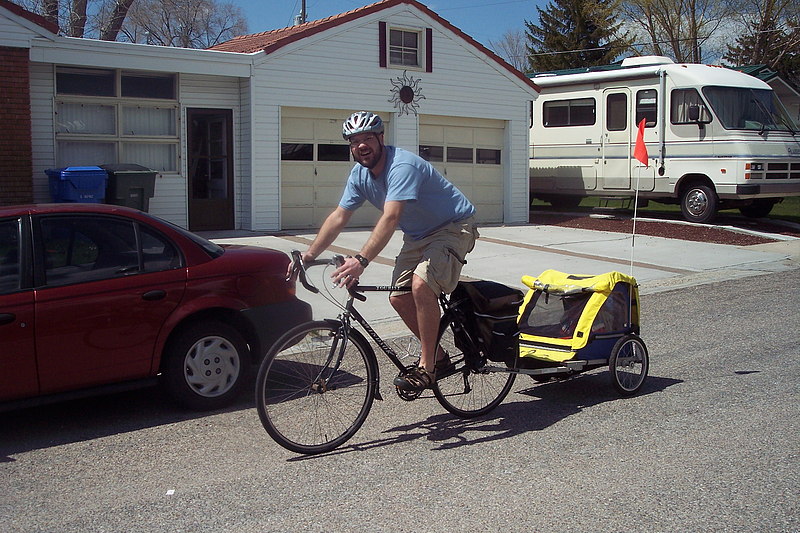 Child Trailer Fun! One of the best purchases I’ve made is my bicycle child trailer. Not only is it fun for my daughter to ride around in, but it’s great for going on pizza runs, hauling camping gear on cycle camps, and transporting around other items that aren’t easily bungeed onto a bicycle rack. At first I was a bit hesitant to buy one, thinking that it would make riding slow and clumsy, or that I’d side-swipe things on the side of the road with it. But, it really isn’t much wider than my body is, and keeping a few more inches away from parked cars and such leaves you plenty of room for error. For those of you wondering what model I bought, it is the Kid Karriage from Nashbar.com. It is very affordable (only $99) and it has really good reviews, particularly about it’s child safety features. 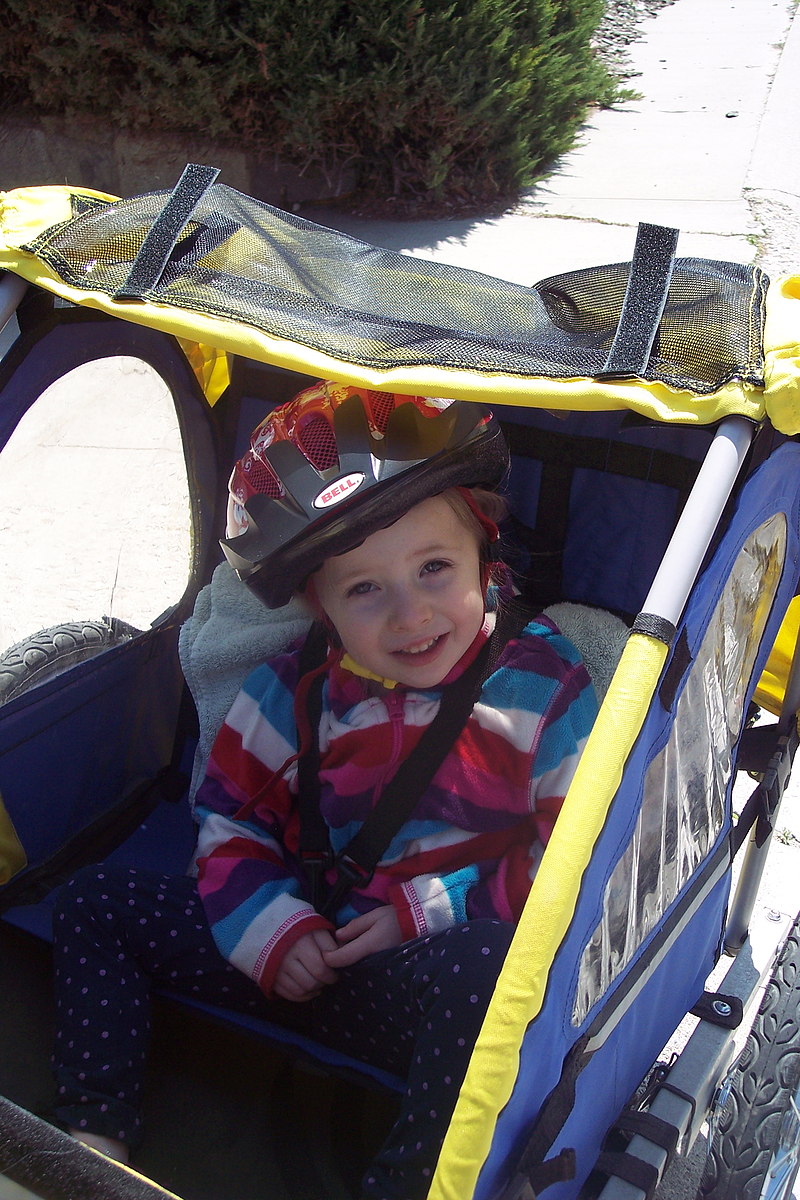 My Daughter Several sources online say that child trailers are safer than other child carriers for bicycles, mainly because the child is close to the ground and has no risk of falling. The Kid Karriage holds 2 children and has a capacity of up to 100 lbs. This is a good thing since every now and then I like to haul a bunch of bulky, heavy stuff. Once I hauled a full propane tank and a 30-pack of beer. Thinking back on that now, I think that was a safety hazard and it is not recommended that you haul flammables or explosives by bicycle. ;-) The main things to do when toting your children around in child trailers is the following:
 Later, dudes! Other than that, there’s really no other difference with towing a trailer than with regular riding. Trailers greatly extend the use of bicycles for all kind of errands and I recommend you get one! Throughout this article are some photos of my daughter and I going to a local Easter egg hunt in April 2011. Enjoy!  Another side shot 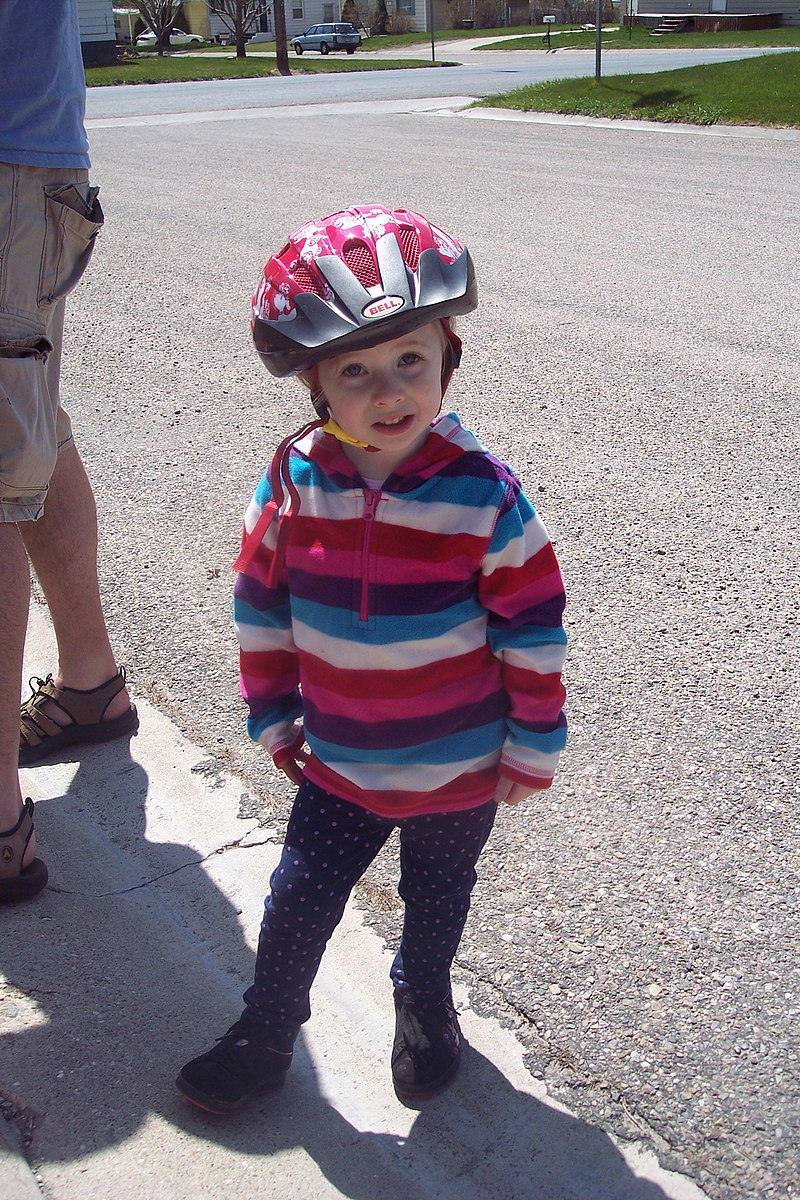 Stylish Helmet! |
||||||||||||||||||||||||||||||||||||||||||
|
Copyright © 2026 Korey Pelton's Cycling Blog - All Rights Reserved Powered by WordPress & Atahualpa |
||||||||||||||||||||||||||||||||||||||||||

 Thank goodness for